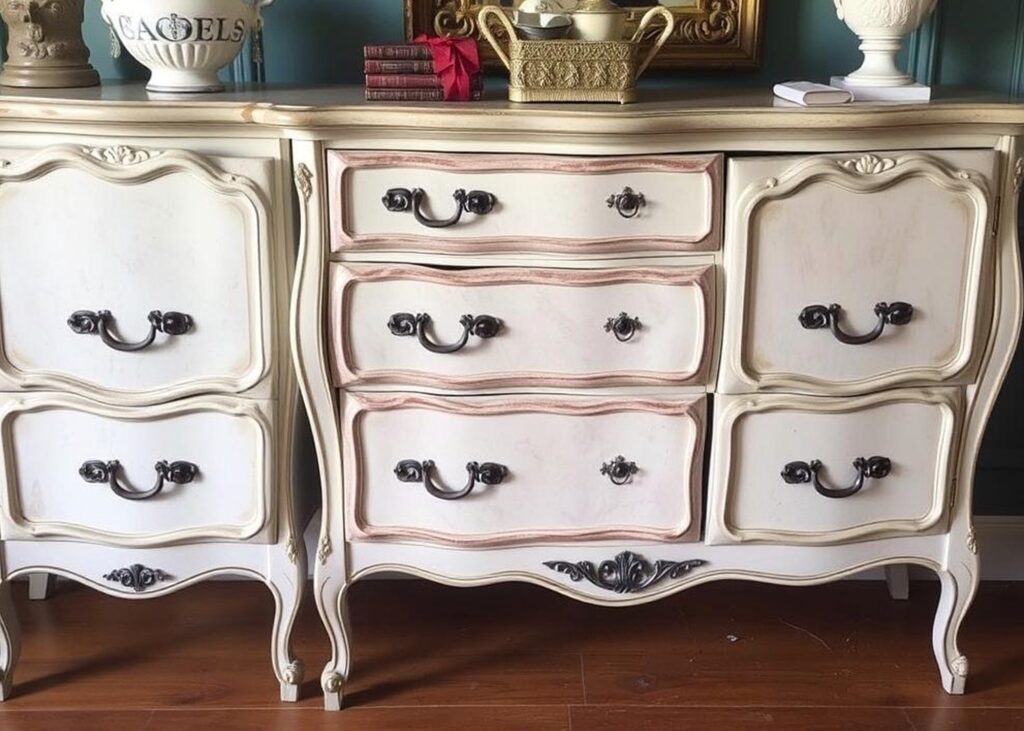
How to Date and Identify French Provincial Furniture
There’s an undeniable charm to French Provincial furniture. It’s a style that effortlessly marries rustic warmth with refined elegance, bringing a piece of the French countryside into any home. But what exactly is French Provincial, and how can you tell an authentic antique from a charming reproduction? This guide will help you identify French Provincial furnitureand offer insights into dating French Provincial furniture so you can appreciate its rich history and unique characteristics.
The Enduring Appeal of French Provincial Furniture
Imagine the sun-drenched fields of Provence or the rolling hills of Normandy. Far from the opulent palaces of Versailles, the country estates and farmhouses of 18th-century France developed their own distinct furniture style. This was French Provincial furniture – a down-to-earth interpretation of the luxurious trends dominating Parisian salons, adapted for practical, comfortable, and beautiful living in the countryside.
These pieces were built to last, often from local French woods, and embellished with hand-carved details that, while simpler than their courtly counterparts, still exuded sophistication. Today, Provincial style decor remains incredibly popular for its versatility, ability to blend with various interior styles, and its timeless aesthetic.
The Hallmarks: Key Identifying Features of French Provincial Furniture
To truly identify French Provincial furniture, you need to understand its defining characteristics:
1. Distinctive Silhouettes and Shapes
One of the most recognizable features is the cabriole leg. This elegant, S-shaped leg, often ending in a scroll or a modest foot, is a hallmark of the style, particularly from the Louis XV period. You’ll also notice:
- Scalloped aprons: The decorative, often undulating, carving along the bottom edge of tables, chairs, or chests.
- Serpentine fronts: Drawers or tabletops that curve outwards and then inwards, creating a graceful, flowing line.
- Curved lines and gentle arches: A general preference for organic, soft lines over rigid straight edges.
- Substantial yet balanced forms: Pieces are often robust but never appear overly heavy or clunky.
2. Wood Types and Finishes
French Provincial furniture was crafted primarily from locally sourced, durable French woods. Common choices include:
- Oak: Known for its strength and prominent grain, often found in Normandy pieces.
- Cherry: Offers a rich, warm hue that deepens with age, popular in fruit-growing regions.
- Walnut: A prized wood, offering fine grain and a beautiful finish.
- Elm, beech, and various fruitwoods (pear, apple): Used for their availability and workability.
Finishes were typically practical and designed to show off the wood’s natural beauty:
- Worn waxed finishes: Allowing the wood to develop a rich patina over time.
- Natural wood: Often left unpainted, showcasing the grain.
- Painted finishes: Though less common than natural wood for original pieces, later revivals introduced elegant creams, pastels, or soft blues and greens, often with distressed effects.
3. Carvings and Ornamentation
While less elaborate than court furniture, hand-carved furniture is a signature of the Provincial style. Common motifs include:
- Rocaille (shell) motifs: A nod to the Rococo influence, often seen on aprons or crests.
- Acanthus leaves: A classic decorative element, adapted in a simpler form.
- Floral sprays: Roses, daisies, or other country flowers, often depicted in stylized arrangements.
- Baskets or sheaves of wheat: Reflecting the agricultural roots of the countryside.
- “C” and “S” scrolls: Graceful, curvilinear designs.
- Carvings are usually centered on key areas like drawer fronts, aprons, crest rails of chairs, or door panels.
4. Hardware
Original French Provincial hardware tends to be sturdy and functional, made from:
- Simple brass pulls and escutcheons (keyhole plates): Often with a worn, aged look.
- Hand-forged iron: Particularly for hinges and simpler pulls.
- The hardware, while decorative, is typically not as ornate or gilded as that found on high-style court furniture.
Dating Your Piece: A Journey Through French History
Dating French Provincial furniture largely involves understanding the stylistic shifts in French culture, particularly the reigns of the Louis kings, as these trends slowly filtered down to the provinces.
1. The Louis XV Period (c. 1730-1760s) – The Golden Age of Rococo Provincial
This is arguably the most recognizable period for classic French Provincial furniture. Influenced by the Rococo style of Madame de Pompadour and the Parisian elite, Louis XV furniture is characterized by:
- Curves, curves, curves! Straight lines are rare.
- Cabriole legs are ubiquitous, often with a subtle scroll or small animal foot.
- Bombe chests: Chests of drawers with a distinctly swelling, rounded front and sides.
- Rocaille (shell) motifs are prevalent, along with floral and foliage carvings.
- An overall feeling of lightness and charm, prioritizing comfort and grace.
If your piece features flowing lines, a distinct “S” curve everywhere, and shell-like carvings, it likely draws inspiration from or is an authentic piece from the Louis XV period.
2. The Louis XVI Period (c. 1760s-1790s) – Neoclassical Restraint
A reaction against the “frivolity” of Rococo, the Louis XVI period embraced Neoclassical ideals, leading to a more restrained, elegant style. For French Provincial furniture, this translated to:
- Straighter lines and geometric forms: Legs become straight, tapered, and often fluted (with vertical grooves).
- Classical motifs: Urns, rosettes, classical columns, and more structured acanthus leaves replace the free-form Rococo designs.
- Symmetry is emphasized, giving pieces a more formal and dignified appearance.
- Chair backs might be oval, square, or shield-shaped.
If your furniture exhibits a blend of rustic charm with classical straight lines and motifs, it may hail from the Louis XVI furniture era.
3. Post-Revolutionary and 19th Century Adaptations
Following the French Revolution, styles evolved further (Directoire, Empire), often becoming simpler or more severe. While these periods didn’t contribute as much to the classic “Provincial” aesthetic, they did influence later revivals.
The 19th and 20th centuries saw numerous French Provincial revivals. As the demand for this charming style grew, craftsmen began producing reproductions. These pieces capture the spirit of the original but lack the true age and construction methods of authentic French Provincial furniture.
Regional Variations: Subtle Differences from Town to Town
France is a diverse country, and its provincial furniture reflects this. Different regions developed unique characteristics based on available materials, local traditions, and specific needs.
- Provence: Known for lighter woods like fruitwoods, often with sun-drenched, natural finishes. Carvings frequently feature baskets, wreaths, and local flowers.
- Normandy: Typically robust and sturdy, crafted from dense oak. Carvings might include wheat sheaves, diamond patterns, or basketweave motifs. Pieces often feel more substantial.
- Brittany: Simple and functional, often with sturdy oak or chestnut. Carvings might reflect maritime life or local folklore.
- Alsace: Influenced by German styles, sometimes featuring painted finishes and more geometric decorations.
Understanding these subtle regional differences can further help you identify French Provincial furniture and appreciate its diverse heritage.
Authenticity Check: Spotting the Real Deal from Reproductions
Distinguishing an original antique from a later French Provincial reproduction is crucial for collectors. Here’s what to look for:
1. Construction Details
- Joinery:
- Hand-cut dovetails: On drawer sides, these will be irregular, show slight variations in size, and may taper unevenly. This is a strong indicator of age.
- Machine-cut dovetails: Perfectly uniform, precise, and identical, suggesting post-1880s production.
- Mortise and tenon joints: Look for wooden pegs holding joints together, indicating traditional craftsmanship.
- Backs and Undersides:
- Rough-sawn wood: Often unplaned or with visible hand-plane marks (parallel, slightly uneven lines).
- Original nails or screws: Early screws were flat-head, often with irregular slots, and sometimes square-headed. Phillips head screws are a definitive sign of post-1930s manufacturing.
- No plywood or particleboard: These materials were not used in original antique pieces.
- Drawer Runners: Expect wooden runners that slide against wooden frames, showing wear and a smooth, dark patina from years of use. Metal glides are a modern feature.
2. Wood and Patina
- Patina: This is the most challenging feature to replicate. Authentic French Provincialpieces will have a rich, deep, and uneven sheen developed over centuries. Look for darkened areas, subtle scratches, and a smooth, mellow feel where hands have repeatedly touched.
- Wood Grain: Old wood often has a distinct, “dry” look compared to newer, freshly milled timber.
- Borer Holes: Small, often inactive, beetle holes can be a sign of age, but ensure they are not active infestations.
3. Hardware
- Original Hardware: Look for consistency in the hardware (pulls, hinges, keyhole escutcheons). It should show signs of age, consistent with the piece itself.
- Wear: Around keyholes and handles, there should be natural wear from countless openings and closings.
- Mismatching Hardware: Can sometimes indicate repairs or replacements, but too many inconsistencies might suggest a pieced-together item.
4. Carvings and Finishing
- Hand-Carving vs. Machine Carving:
- Hand-carvings will have slight imperfections, variations in depth, and sharper or more nuanced edges. You might see small tool marks.
- Machine carvings are perfectly uniform, often softer and less defined, and will repeat flawlessly across identical elements.
- Distressing: Natural distressing comes from daily use over time – dents, scratches, fading, and chips will be irregular and logical (e.g., more wear on corners). Manufactured distressing is often too uniform or deliberately placed.
Caring for Your French Provincial Treasures
Once you’ve acquired your beautiful antique furniture, caring for it is simple yet essential.
- Dust regularly with a soft, dry cloth.
- Avoid harsh chemical cleaners that can strip the precious patina.
- Use a good quality furniture wax (like beeswax) every few months for natural wood finishes, buffing to a soft sheen.
- Protect from direct sunlight and extreme temperature/humidity changes, which can cause wood to crack or warp.
Conclusion: A Legacy of Timeless Style
French Provincial furniture is more than just a decorative element; it’s a piece of history, a testament to enduring craftsmanship and timeless style. By understanding its key characteristics, appreciating its historical evolution, and knowing how to differentiate authentic pieces from modern reproductions, you can confidently identify French Provincial furniture and bring an authentic touch of the French countryside into your home. Each Provincial style piece tells a story, blending the rustic charm of rural life with the refined elegance of courtly design, making it a beloved and versatile choice for generations of decorators and enthusiasts.